are closed end funds riskier
Longshort hedge funds can offer greater investment opportunities beyond those of mutual funds but typically require higher investment minimums eg 100000 and may be as high as 1 million or more. The Fund is a closed-end fund which is traded on the New York Stock Exchange and invests primarily in income-producing equity securities issued by infrastructure companies.

Difference Between Closed End Fund And Exchange Traded Fund Differbetween
The Morningstar Rating TM for funds or star rating is calculated for managed products including mutual funds variable annuity and variable life subaccounts exchange-traded funds closed-end funds and separate accounts with at least a three-year history.

. Taking out home equity could be riskier. At inception institutional investors make an. Elan Hiutin managing director of investments at Wedbush Securities likes NDMO a closed-end fund that invests in other closed-end.
If you default on your loan you could lose your home. You can lower the amount of money you spend on transactions by using mutual funds or ETFs that track indexes such as the Standard Poors 500 SP 500. These shares trade on the open market.
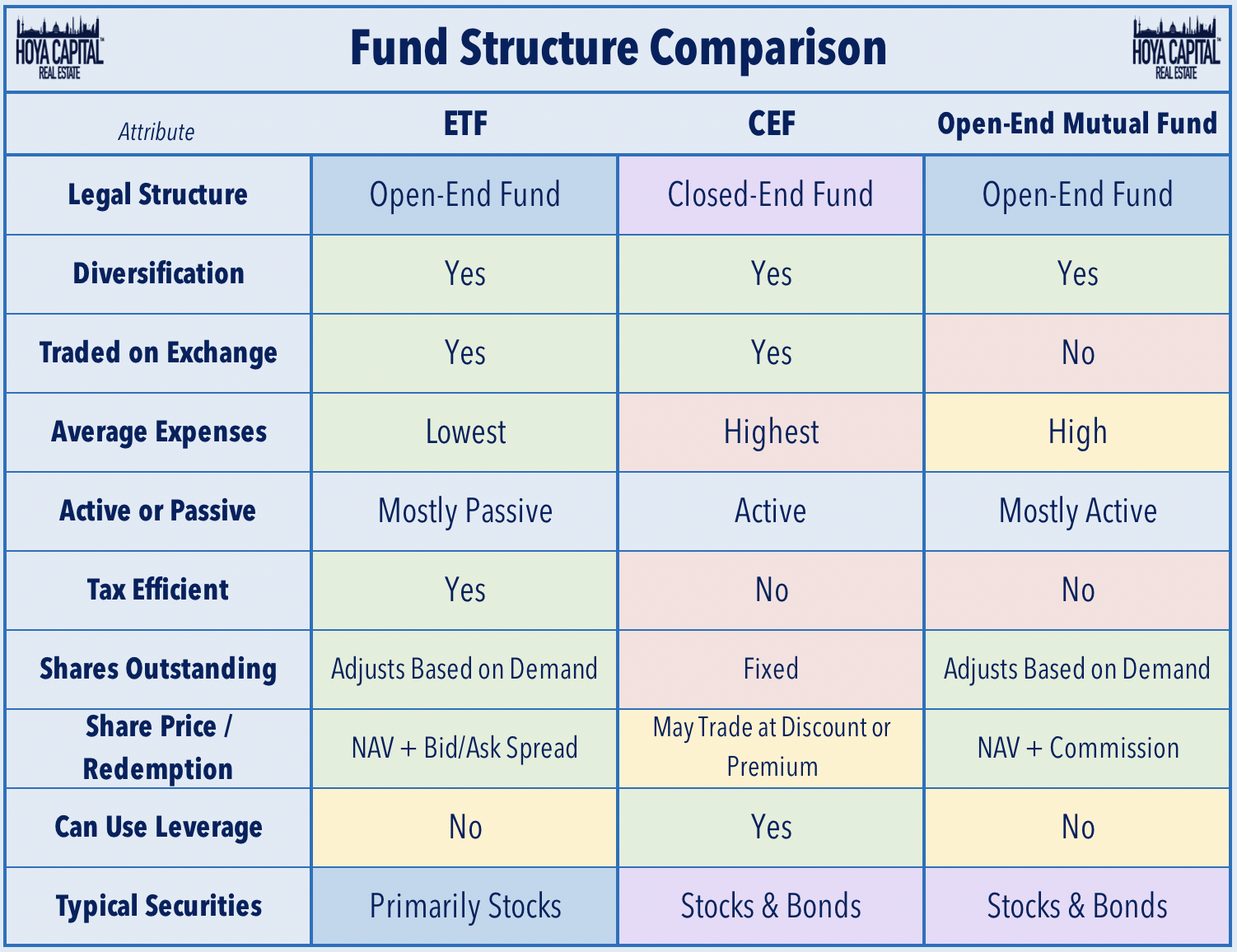
Incidentally both funds have expense rates of about 07 to 08. The total value of stock holdings in hedge funds portfolios went down from 31 trillion at the end of December to 28 trillion at the end of March. Exchange-traded funds and open-ended mutual funds are considered a single population.
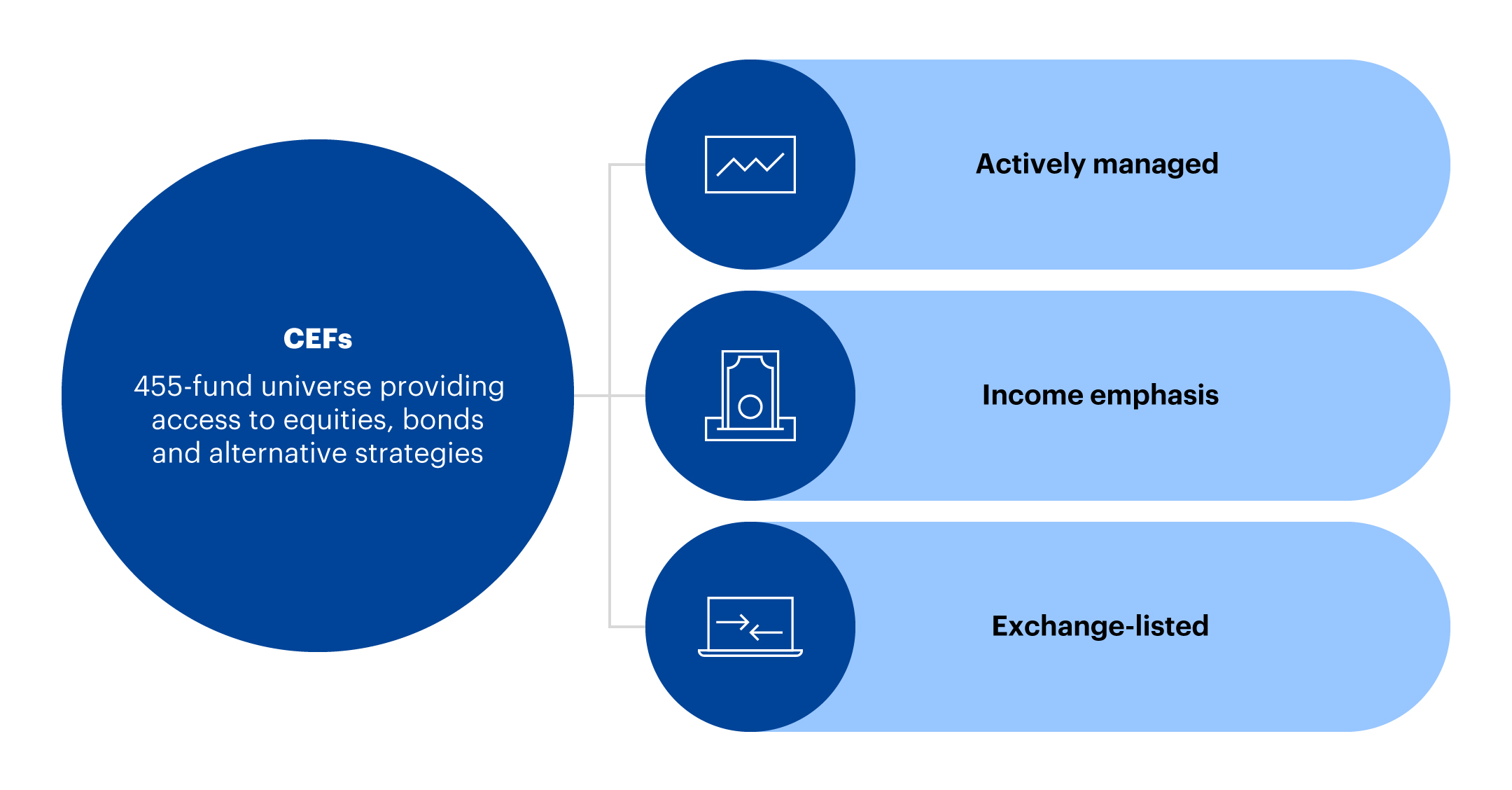
An investment fund is a supply of capital belonging to numerous investors used to collectively purchase securities while each investor retains ownership and control of his own. Leverage means additional risk. A closed-end fund CEF is a type of mutual fund where investors pool their money and a professional money management team oversees the portfolio by selecting the underlying stocks bonds and other securities.
They can make a good investment if you follow this rule. The SP 500 is a list of 500 of the best-performing stocks and is managed by SP Global. The average 5-year Tax Cost Ratio of iShares ETFs and actively managed open-end mutual funds available in the US.
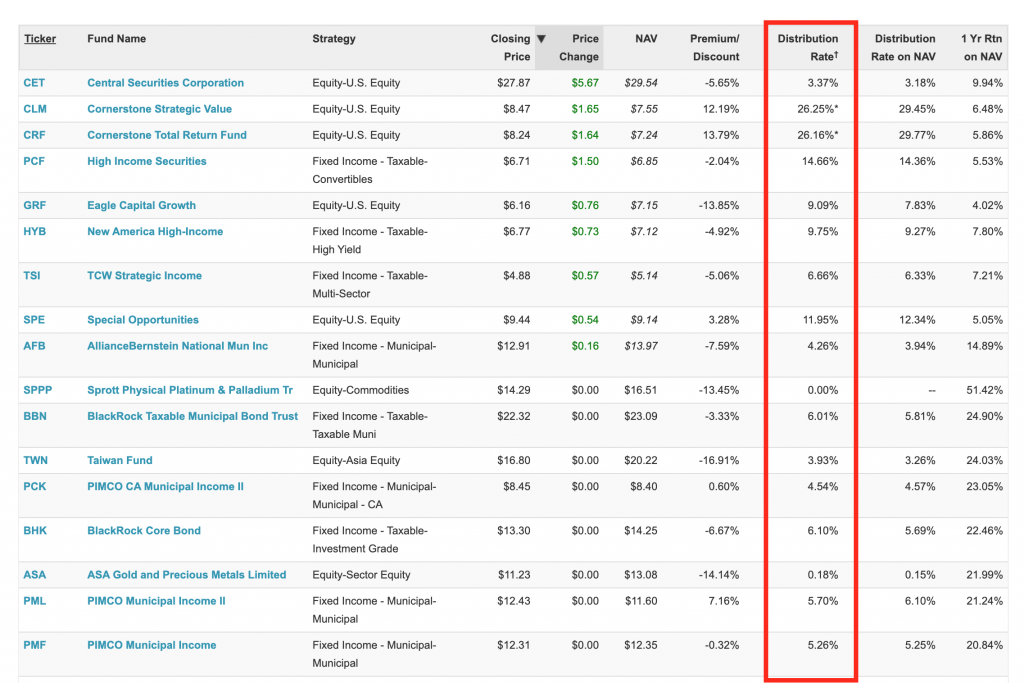
Shares of closed-end funds frequently trade at a market price that is a discount to their NAV. Too much debt makes the fund riskier. Closed-end funds are subject to management fees and other expenses.
This combined with the fact that a closed-end fund doesnt redeem or issue new shares like a normal mutual fund subjects the fund shares to the laws of supply and demand. Some closed-end funds use leveragemeaning they borrow against the securities in the fund to buy more income-producing securitiesand are thus able to pay a higher yield. By concentrating on higher credit qualities within the non-investment-grade bond universe and avoiding the riskier more speculative lower tiers PIMCO High Yield Fund is designed to provide an attractive riskreward tradeoff for high yield investors.
If you default on your loan you could lose your home. The Fund is a closed-end fund which is traded on the New York Stock Exchange and invests primarily in income-producing equity securities issued by infrastructure companies. Tax Cost Ratio is a Morningstar measure of the impact of taxes on capital gains and income distributions on performance.
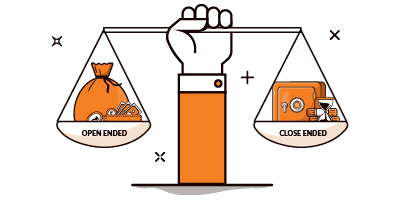
This type of fund has a set number of shares issued to the public through an initial public offering IPO. Closed-end funds and separate accounts with at least a three-year history. Why you should skip it.
Holdings are subject. Excluding municipal bond and money market funds included in the comparison is 068 and 150 respectively. A private-equity fund is a collective investment scheme used for making investments in various equity and to a lesser extent debt securities according to one of the investment strategies associated with private equityPrivate equity funds are typically limited partnerships with a fixed term of 10 years often with annual extensions.
Holdings are subject. Riskier assets like stocks tend to perform better over time but those who are close to retirement may not have the time to recover. Even after accounting for fees both have outperformed plain vanilla TIPS funds over 5 and 10 years in part because of the leverage.
Closed-end funds are one of two major kinds of mutual fund. Always buy them at a discount. What Are Closed-End Funds.
A closed-end fund is a public indirect pooled investment vehicle. The funds that track the list generally have low asset turnover which can lower your fees and taxes. In fact longshort mutual funds are generally available to all investors and usually have a low minimum investment 1000 or less.
This allows them to invest in riskier assets which typically pay relatively high yields and to use leverage which can boost the portfolios income on a NAV basis. You can learn more about the different types of.

Closed End Funds Basics How It Works Pros Cons The Smart Investor
/GettyImages-1162966566-19102c67f9424a5d9b7eb826332ed48d.jpg)
Understanding Closed End Vs Open End Funds What S The Difference
A Guide To Closed End Funds

Closed End Funds Basics How It Works Pros Cons The Smart Investor
Difference Between Open Ended Funds Vs Close Ended Funds
Mutual Fund Amentals A Visual Guide Mintlife Blog Personal Finance News Advice Finance Investing Mutuals Funds Investing Money

Closed End Funds Basics How It Works Pros Cons The Smart Investor
1
3
Real Estate Cefs Satisfying A High Yield Fix Seeking Alpha
Guide To Closed End Funds Money For The Rest Of Us

What Is A Closed End Fund And Should You Invest In One Nerdwallet
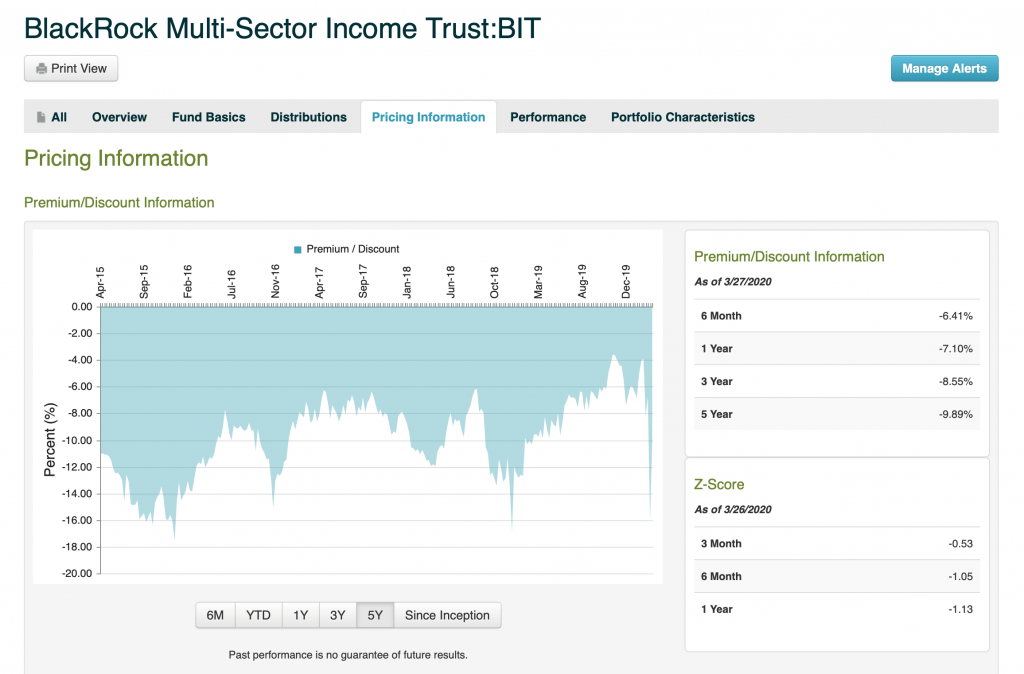
Guide To Closed End Funds Money For The Rest Of Us
1
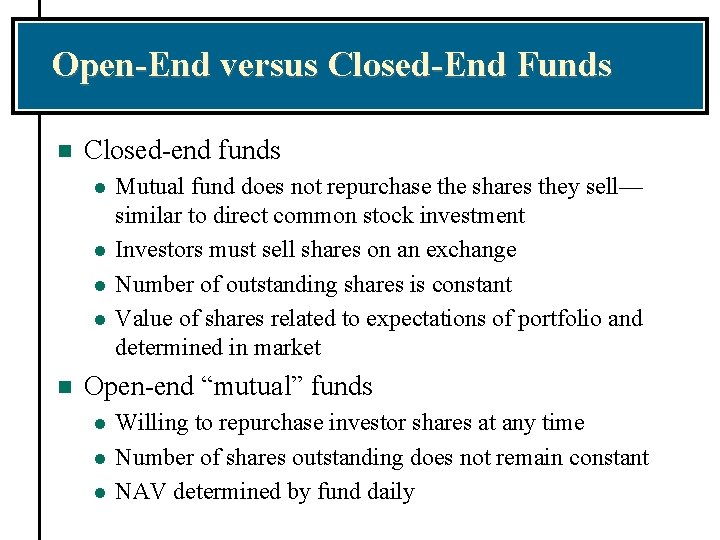
Chapter 24 Mutual Fund Operations Chapter Objectives Explain
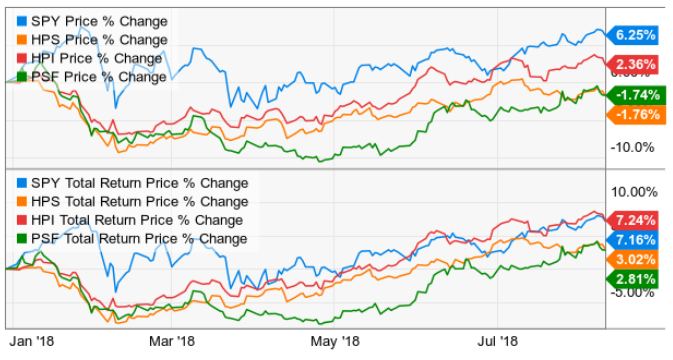
Preferred Stock Closed End Funds Reviewing The Category Seeking Alpha
1
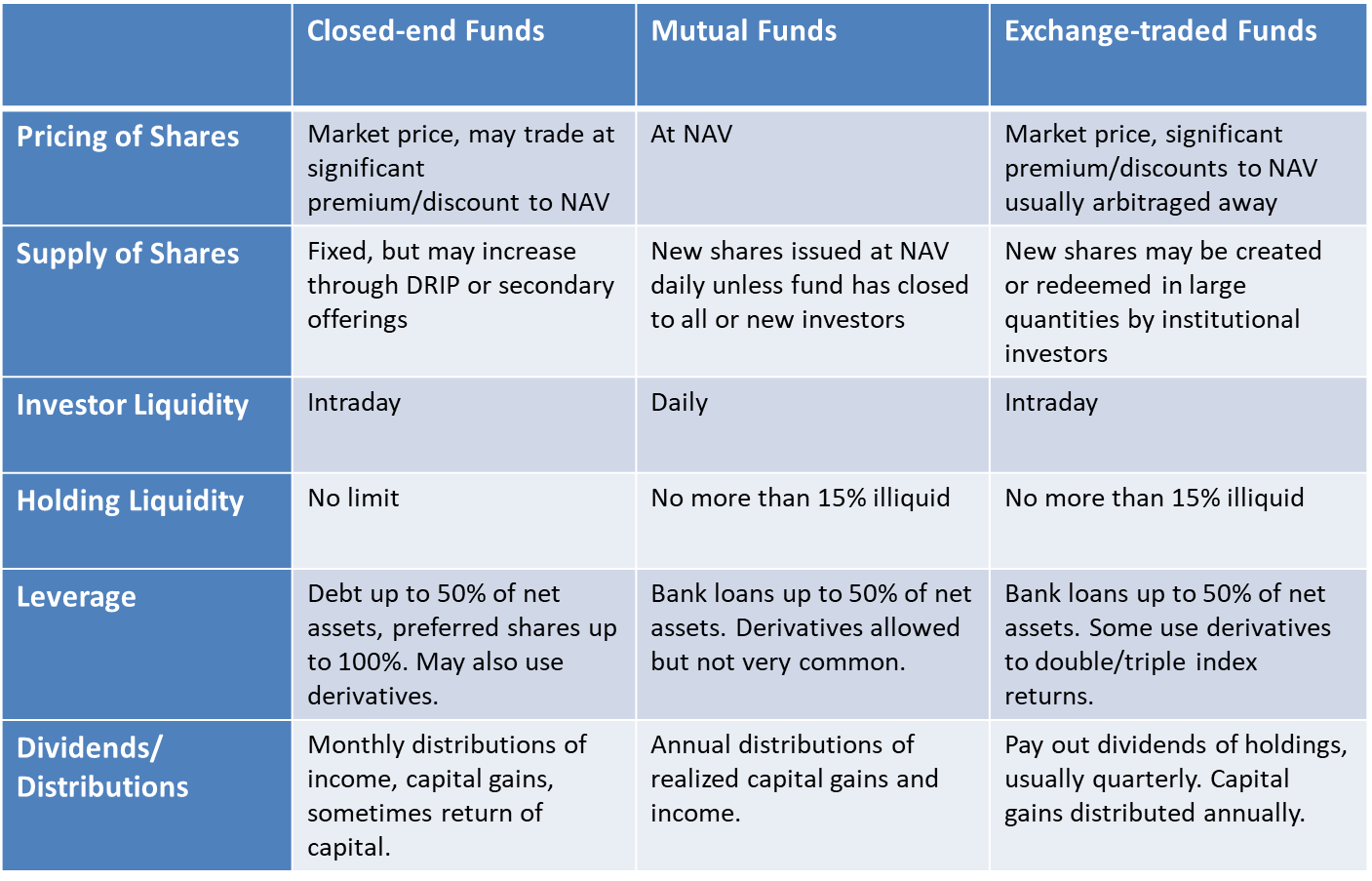
Advantages Of Closed End Funds In A Low Yield Environment Bats Cefs Seeking Alpha
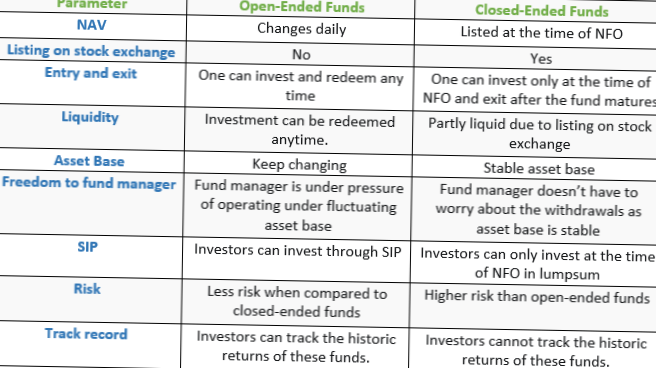
Difference Between Open Ended And Closed Ended Mutual Funds Differbetween